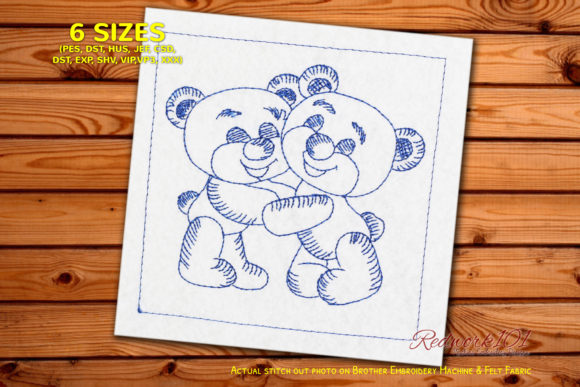
A Designer's Review of Teddy Bear Hugs Bluework
When I first saw the Teddy Bear Hugs Bluework embroidery design, I wasn't just looking at a digital file—I was envisioning it stitched out. In my work, a design is only as good as its real-world application, and my immediate thought was how this simple, charming motif could become a tangible, beloved product. It’s a design that, when executed well, transcends its digital origins and becomes a piece of visual warmth.
The Quiet Charm of a Bluework Bear
The mood here is gentle and nostalgic. It’s not a loud, celebratory Valentine’s Day piece, but rather a soft, enduring expression of affection. The bluework style gives it a classic, almost heirloom quality, which I find incredibly versatile. The layout is clean and centered, with enough open space around the bear to let it breathe on a fabric. This isn’t an overly detailed illustration; its personality is built on clear shapes and implied hugs, which means it will translate into stitches with clarity and won’t get lost in dense fill areas. It naturally belongs to projects meant to convey personal care—think personalized gifts, nursery decor, or boutique kitchen towels.
Where This Design Finds Its Perfect Home
I’m picturing this on a cozy, well-worn sweatshirt, a canvas tote bag for a cherished friend, or a baby’s blanket. The scale feels ideal for a mid-sized hoop, making it a fantastic choice for apparel decorators and small shop owners looking for a design that stitches up quickly yet looks thoughtfully handmade. For a Valentine's S Day gift, it sidesteps cliché and offers something more timeless. On a pillow cover or an apron, it becomes a delightful daily accent. For an Etsy seller creating embroidered patches, this design offers excellent stitch clarity for a clean, professional finished product.
I also see strong potential in printable mockups for digital product sellers. The clear lines and defined subject would present beautifully in a shop listing, allowing customers to easily imagine it on their own custom apparel or holiday gifts. Its visual appeal is directly tied to its stitching clarity—a well-defined design builds customer trust because the finished item looks intentional and well-crafted.
Navigating the Practicalities of Stitching
In real-life embroidery situations, performance is key. On a tote bag or cap, the potentially optional box stitch border mentioned in the description is a practical consideration. It could offer a neat frame, but skipping it, as suggested, might yield a more organic, modern look on a sweatshirt or baby item. This flexibility is a plus for creative entrepreneurs adapting a design for their brand.
Caution Zones for the Crafting Professional
There are places, however, where I’d advise careful use. On very small hoop sizes, any smaller details within the bear’s form might need scrutiny. Stitching on thin or stretchy fabric, like a fine t-shirt, will demand the right stabilizer to keep the fill stitch areas smooth. Dark fabric backgrounds require a thoughtful thread color contrast check—bluework traditionally implies lighter fabric, but a bold contrast thread on dark denim could create a striking boutique product. For products needing frequent washing, like kitchen towels, ensuring the stitch density is secure is paramount.
The design’s value for a craft business is enhanced by its giftability and recognition—it’s an instantly understandable image. This strengthens brand consistency for a maker specializing in heartfelt, handmade products. For commercial embroidery projects, its straightforward composition means reliable stitching across multiple items.
Essential Notes Before You Hoop Your Fabric
My process always involves a pragmatic pre-check. First, run Teddy Bear Hugs Bluework on scrap fabric. This reveals the true stitch density and lets you inspect small details like the bear’s outlines. Check your thread color palette against your final fabric—does your chosen blue sing against the background? Confirm your intended hoop size accommodates the design comfortably.
I also recommend testing it conceptually in black and white mockups to judge its form without color, and comparing how it feels on both light and dark fabric backgrounds in your mind. Always use a stabilizer suited to your final product’s fabric texture. Crucially, before selling finished items or digital products, you must confirm the licensing terms for this embroidery file. The product description doesn’t specify these, so that step is non-negotiable for professional use.
The Final Stitch: Professional Judgment
Teddy Bear Hugs Bluework strikes me as a dependable design asset. It has a visual personality that leans into handmade presentation without being fussy. It’s likely to engage buyers because it evokes a genuine, gentle emotion. For apparel decorators and makers, it offers a path to a finished product that feels both professional and personal. Its true test, as with any machine embroidery design, will be in the hands of the crafter—their skill, their fabric choice, their vision for its final home. But from a designer’s point of view, this design provides a solid, charming foundation for a wide array of successful embroidery projects.