A Valentine Gift Box Design Built for Real Projects
First Look: A Simple, Warm Gesture
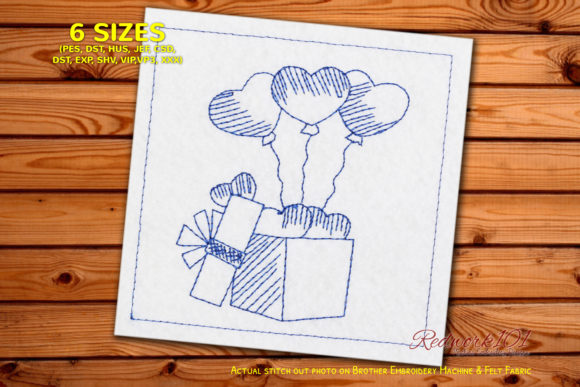
When I loaded the Happy Valentine Day Gift Box Redwork design, my immediate impression was one of quiet charm. It’s not a loud, sparkly declaration, but a gentle, hand-drawn-style sentiment. The heart-in-a-box motif is instantly recognizable as a Valentine’s Day emblem, but its simplicity gives it a timeless, almost nostalgic feel. The layout is clean, centered, and uncomplicated—a huge plus for embroidery. This isn't a design shouting for attention; it's a confident, friendly whisper that says "thoughtful gift." That visual personality makes it a natural fit for projects where subtlety and craftsmanship matter more than flash.
Where This Design Finds Its Home
In my work, a design’s true worth is measured by the projects it can gracefully inhabit. This gift box design excels on personalized gifts and small shop products where the handmade touch is paramount. Imagine it stitched neatly onto a linen kitchen towel as a hostess gift, or centered on a cozy pillow cover for a newlywed couple. I particularly like its potential for baby embroidery—stitched onto a blanket corner or a soft sweater, it becomes a sweet keepsake without being overly ornate.
For custom apparel, it’s a strong candidate for tote bag designs and sweatshirt embroidery. The scale feels right: not too small to lose detail on a bag, not too large to overwhelm a shirt pocket. As an embroidered patch, it would hold its clarity beautifully. I can easily see this in an Etsy listing for a boutique’s Valentine merchandise—a tea towel set or an apron—where the product photo would show clean, crisp stitches that customers trust.
A Real Scenario: The Boutique Tote Bag
Let’s walk through a typical use. A client requests a small batch of embroidered tote bags for her gift shop. The Happy Valentine Day Gift Box Redwork file is loaded. The first practical note: the description mentions the outer box stitch color can be optional or skipped. This is valuable flexibility. On a natural canvas bag, perhaps I skip the box outline and let the heart and text stand alone for a softer look. On a darker fabric, I might use the box in a contrasting thread to frame the design. Testing this on scrap fabric first is crucial to see how those elements interact with my chosen thread colors and fabric texture.
Performance on the Hoop: Practical Considerations
For real machine embroidery, this design appears forgiving. The shapes are open, with likely reasonable stitch density. That means it should stitch out cleanly without excessive puckering, even on moderately stretchy fabric like a sweatshirt, provided you use the proper stabilizer. The lack of microscopic detail is a relief; tiny lettering or dense filigree can be a headache on some materials. However, this doesn’t mean it’s immune to challenges.
You should be careful with very small hoop sizes. If you shrink it down too much for a cap or baby sock, the text might lose its legibility. Similarly, on highly textured fabrics like some blankets, the clean lines could get a bit lost. The design’s strength is its clarity, so preserving that is key. On dark fabric, a strong thread color contrast—a bright white or a vibrant red—will be essential to maintain its visual appeal. Always check this in a black and white mockup to judge contrast before stitching.
It’s About More Than Just Stitches
Using a design like this in a craft business affects more than just the hoop time. It influences customer trust. A clean, well-executed stitch-out of a coherent design shows professionalism. It enhances the giftability of the finished product—this design feels inherently like a gift, so the item becomes more desirable. For brand consistency, if your shop specializes in warm, classic motifs, this embroidery file fits that narrative perfectly, strengthening your overall presentation.
Designer Notes for a Smooth Stitch-Out
Before committing this to a client project or your own commercial embroidery run, a few hands-on checks are wise.
- Test, Always Test. Run it on a scrap of your actual project fabric. Observe how the "box" element behaves if you include or omit it.
- Consider Your Background. How does it look on both light and dark fabric in a digital preview? Plan your thread colors accordingly.
- Inspect the Smallest Details. Even in a simple design, check corners and connections in the preview to ensure they'll stitch smoothly.
- Confirm the Fundamentals. While specifics weren't provided here, always verify the required hoop size, file formats for your machine, and most importantly, the licensing. Is this for personal use only, or can you sell the finished product? Never assume.
- Think Beyond Red. "Redwork" suggests a classic approach, but don't limit yourself. This design could be stunning in a soft pink, a deep burgundy, or even a neutral grey for a modern twist.
The Final Verdict for Makers
The Happy Valentine Day Gift Box Redwork design is a reliable, charming asset. It won’t revolutionize your portfolio, but it will faithfully serve it. It’s the kind of digital embroidery file you keep in your library because you know, when a holiday embroidery project arises or a customer wants a personalized gift with a classic heart, it will stitch out predictably and look excellent on the final product. For apparel decorators, Etsy sellers, and creative entrepreneurs, that reliability is everything. It turns a digital asset into a trustworthy, sellable, and genuinely lovely finished product. Just give it the practical respect any design deserves: test it, know its limits, and let its simple warmth do the talking.