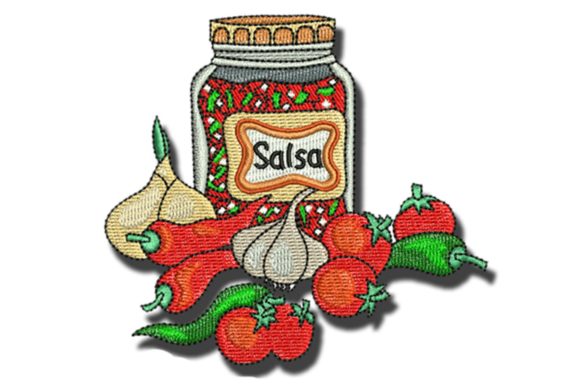
Salsa Embroidery: A Professional Review for Business Merchandise
As an embroidery designer who works daily with small businesses to build their branded merchandise, I see a lot of designs. When I evaluate a new embroidery file like Salsa, I look at it through a commercial lens: how will this perform as a brand asset, not just as decoration? This review focuses on the practical application of the Salsa machine embroidery design for patches, uniforms, and product enhancement.
First Impression: Warm, Approachable & Handmade-Friendly
The title Salsa immediately evokes a sense of warmth, flavor, and craft. The description suggests excellent application for kitchen textiles, which translates visually to a design that feels handmade, friendly, and rustic. This is a powerful personality for businesses in the food category, or any brand wanting to communicate authenticity and craftsmanship. It doesn’t scream corporate; it whispers carefully made. This makes it ideal for businesses like boutique cafés, artisan bakeries, farm-to-table restaurants, creative studios, and Etsy sellers whose brand hinges on a personal touch.
Real-World Business Applications: Beyond the Kitchen Towel
The suggested uses are excellent starting points, but the true potential for Salsa in small business merch is vast. Let’s explore concrete applications.
Branded Apparel & Staff Uniforms
This design can serve as a perfect chest logo accent on staff polo shirts or as a sleeve detail on work shirts. Its likely organic, flowing shapes would lend a professional yet approachable look to staff in a café or boutique. For a more subtle branding, consider it on the cuff of an apron—a smart touch for bakery or florist staff. On dark uniforms, ensure the thread color palette offers enough contrast for visibility.
Embroidered Patches for Merchandise & Labels
Salsa has strong potential as an embroidered patch. Patches are versatile assets: they can be ironed or sewn onto tote bags, denim jackets, or caps as event merch or customer gifts. A small patch can also act as a product label on handmade goods—think a jar of actual salsa or a branded apron sold by a craft business. Before production, you must test this design at a small patch size. Check if any intricate details or outlines remain clear when minimized. High stitch density can become bulky on a small patch.
Caps, Totes & Premium Product Add-Ons
For cap embroidery, the curved surface of a cap front requires a design that can adapt. Evaluate Salsa’s composition for potential distortion on a curve. As a tote bag design, its handmade aesthetic adds value, transforming a simple bag into premium merchandise. It could also be used as a decorative accent on product packaging, like a branded tea towel or oven mitt set, elevating the perceived value.
Where to Use Salsa with Care: Practical Designer Notes
Every design has optimal and challenging applications. For successful commercial embroidery projects with Salsa, consider these points.
- Test in Black and White First: Before committing to a thread scheme, stitch a sample in a single dark and a single light color. This reveals the true structure and density of the design without color distracting you.
- Review Fabric Texture & Stabilizer: The description says it will look great on any fabric, but for business items that need frequent washing—like aprons, towels, and uniforms—you must pair it with the proper stabilizer for the base fabric (canvas, cotton, polyester) to prevent puckering or stitch distortion over time.
- Inspect Spacing & Tiny Elements: Look closely at any potential tiny lettering or fine lines. On items like pot holders or dish cloths with a coarser texture, very fine details may get lost.
- Create a Printable Mockup for Client Approval: Always generate a mockup showing Salsa on the actual product—an apron, cap, or tote bag. This helps the business owner visualize the final product and ensures visual consistency with their other brand assets.
- Confirm Commercial Licensing: Before using this digital embroidery file for any business merchandise, you must confirm the licensing terms allow for commercial embroidery. This is a critical, non-creative step that protects your business and your client.
Impact on Brand Identity & Customer Perception
Using Salsa thoughtfully on your merchandise directly impacts your brand. Its rustic, handmade presentation builds customer trust and engagement for businesses that pride themselves on authenticity. A beautifully embroidered patch on a tote bag signals premium quality, making the product feel more valuable. Consistency—using the same design across aprons, staff shirts, and gift merchandise—strengthens recognition. For a pet brand or florist using a food-themed design, it could cleverly signal natural, wholesome ingredients or a fresh, vibrant attitude.
Final Advice Before You Hoop
Compare Salsa beside your other design assets. Does it complement your logo or typography? Does it tell the story you want? Then, test it on real fabric. Hoop a scrap of the actual material you’ll use—whether it’s towel fabric for kitchen textiles or twill for a cap—and stitch it out. This is the only way to confirm hoop size suitability, thread color contrast on that specific background, and the final look on the finished product. That small sample stitch is your most valuable business tool.
In summary, Salsa presents as a warm, craft-oriented design with substantial potential to enhance small business merchandise. Its success hinges on methodical testing for your specific applications—patch size, fabric, and commercial intent. When executed with these professional considerations, it can become a beloved part of your brand’s visual identity and a valuable asset on your products.