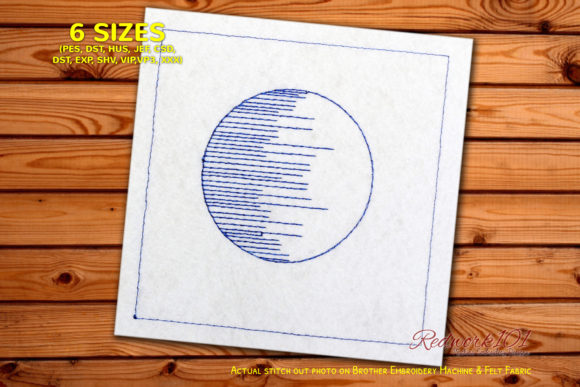
A Craft Fair Review of the Fill Moon Bluework Embroidery Design
From the perspective of a designer preparing for a weekend market, every embroidery file needs to be evaluated not just for its beauty, but for its practical selling power. Today, I'm looking at the Fill Moon Bluework design, considering how it would translate into products for a booth display. My immediate impression is one of soft, modern, and decorative appeal. The title suggests a focus on a filled celestial motif, which inherently carries a peaceful, inspirational mood—perfect for the current market trends.
Where Fill Moon Bluework Stands Out in a Booth Display
Imagine your table: a mix of embroidered tote bags, aprons, tea towels, and small giftable items. A design like Fill Moon Bluework needs to catch the eye quickly. I see it having a strong presence on light-colored fabrics. On a simple cream canvas tote bag or a linen apron, the bluework would pop as a clean, intentional statement piece. It feels more minimal and elegant than rustic or bold, which means it would attract customers looking for something subtly meaningful rather than overtly festive.
Its best chance to sell, in my experience, is as a focal design on premium everyday items. A pillow cover or a fabric pouch with this embroidery instantly elevates the product, suggesting handmade quality and thoughtfulness. As a smaller accent—say, on the corner of a tea towel or a cap—it could work, but its true value is in being the main event. On a busy craft fair table, products with clear, uncluttered focal points sell faster.
Testing Fill Moon Bluework on Key Products
Let's walk through a real product lineup and evaluate.
Tote Bags & Market Bags
This is a prime candidate. The design size needs to be substantial enough to be appreciated from a few feet away. Fill Moon Bluework should be centered for maximum impact. On darker bag colors, the thread contrast is absolutely critical; you must test this on scrap fabric first.
Aprons & Kitchen Towels
For aprons, placement on the bib or a lower corner works well. On tea towels, consider the fabric texture. Some towels can be coarse; a design with potentially dense stitch areas might require a heavier stabilizer to keep the stitches smooth and prevent puckering, which detracts from the handmade quality.
Caps, Patches, & Small Pouches
Here we need careful-use notes. Embroidering on curved cap surfaces requires skill and the right stabilizer. A design with fine details might lose clarity on such a small, structured item. Patches are a great option if the design is not overly intricate, as they can be sold as standalone items. For small pouches, Fill Moon Bluework would make a lovely, giftable product, especially if paired with complementary fabric colors.
Pillow Covers & Booth Samples
This is where the design can shine as a decorative, home-décor piece. It feels premium here. Always create at least one real mockup for your booth—a physical pillow cover draws more engagement than a printed mockup alone. Customers love to touch and see the actual stitch work.
Practical Production & Selling Points
For the Etsy seller and small shop owner, efficiency and appeal are key.
How easy is it to understand at a glance? The "moon" theme is universally recognized and conveys calmness. This quick readability is a sales advantage at a bustling fair.
Batch production and repeatability: If the design stitches out cleanly without excessive thread changes or overly dense areas, it's a good candidate for producing multiple units. Consistency in your handmade products builds brand trust.
Photographing for online listings: The clean, likely minimalist nature of Fill Moon Bluework should photograph well. Focus on shots with good natural light to show the texture of the stitches. Highlight it on different product types in your listings to attract various buyers.
A crucial reminder: the product description mentions "The Box Stitch shown in picture is optional" and that the outer box color can vary. This is a vital production note. It means you have flexibility. You can adapt the design to your product's color scheme by skipping that element if it doesn't suit your vision. This adaptability is a huge plus for commercial embroidery, allowing you to tailor the design to your brand's consistency.
Essential Designer Notes Before You Stitch
Never assume. Always test.
- Test on scrap fabric identical to your final product fabric. Check thread contrast, especially if using dark fabrics.
- Review the design spacing and stitch density in your software before hooping. Tiny details or small lettering (if present) may need adjustment for smaller hoop sizes.
- Confirm the hoop size you intend to use. The design must fit the product area you have planned.
- Use the right stabilizer for the fabric texture. A kitchen towel and a canvas tote need different support.
- Compare fabric colors physically. A digital preview doesn't always match real-life thread pop.
- Most importantly, confirm commercial licensing for the digital embroidery file before selling any finished products. This is a non-negotiable step for any craft fair product.
The Final Booth Impact
Fill Moon Bluework, when executed well on appropriate products, boosts your table's visual appeal. It attracts customers seeking inspirational, well-made goods. It adds a layer of perceived value through its decorative and modern feel. By focusing on its strengths as a focal point on light, premium fabrics, and by rigorously testing its production, you turn this embroidery file into a reliable, selling craft fair product that engages buyers and supports your handmade business.