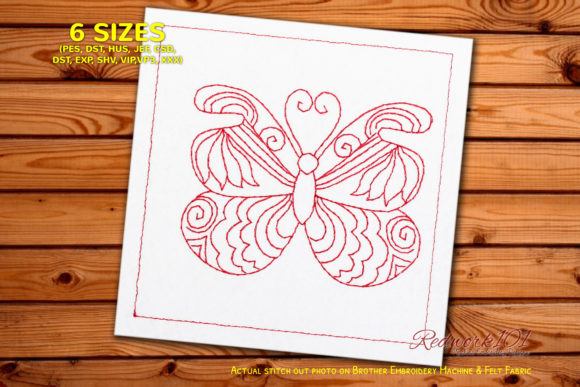
An Elegant, Versatile Butterfly Design for Your Craft Projects
When you're selecting an embroidery file for a client project or your own handmade goods, you're not just looking for a pretty picture. You're evaluating a design's real-world performance, its potential to elevate a product, and its ability to connect with a buyer. Today, I'm considering the Beautiful Butterfly with Swirl Pattern. Let's walk through how this design holds up from a practical, professional embroidery standpoint.
The First Impression: Soft Movement and Artistic Flair
This butterfly design immediately strikes a different tone than a typical, hyper-realistic insect motif. The soft swirl pattern integrated into the wings gives it a sense of gentle motion and artistic flair. It feels less like a scientific illustration and more like a decorative element, which opens up a wider range of applications. The mood is whimsical, elegant, and a touch ethereal—perfect for projects where you want beauty without heaviness.
Where This Butterfly Flies: Ideal Project Applications
Thinking about my upcoming work, this design naturally fits several niches. For a custom embroidered tote bag or apron, it provides a lovely focal point without being overly dense. It would be charming on a baby blanket or nursery pillow cover, where the soft swirls complement a gentle aesthetic. I'm also picturing it on a light cotton sweatshirt or the corner of a kitchen towel—projects where detail is appreciated but stitch density shouldn't compromise the fabric's drape or washability.
The optional box stitch mentioned in the description is an interesting feature. In most practical applications, I'd likely omit it, using the butterfly itself as the standalone artwork. That box, likely a different color, seems intended for a very specific layout or perhaps a patch application. For the majority of custom apparel and handmade product uses, the core butterfly with its swirls is the true asset.
A Real Scenario: Crafting a Boutique Tea Towel Set
Let’s say I’m preparing a set of embroidered tea towels for my small shop’s spring collection. I need a design that’s visually appealing but won’t require an enormous amount of stitching time or heavy stabilizer. The Beautiful Butterfly with Swirl Pattern fits perfectly. Its open, flowing lines would stitch out cleanly on the linen-blend fabric. I can envision offering it in a classic white thread for a subtle look or a soft blue thread to match the “swirl” theme. Customers browsing my Etsy listings would see it as a delicate, handmade upgrade for their kitchen, increasing the perceived value of a simple towel.
Caution Zones: Where to Use This Design Carefully
Every design has its limits, and a professional review means pointing them out. This butterfly, with its presumably detailed wing outlines and interior swirls, requires attention in a few areas. On very small hoop sizes, the swirl details might lose clarity, becoming a blur of fill stitch. I'd avoid using it on highly textured fabrics like thick terry cloth or loose-weave blankets where fine lines can get lost.
Stretchy fabric like standard t-shirts also demands careful hoop technique and stabilizer choice to keep those elegant lines from distorting. Similarly, embroidering it on a curved surface like a cap requires testing—the central shape might adapt well, but the outermost swirls could warp if not positioned correctly. For dark fabric, the color contrast plan is crucial; you’d need to ensure the chosen thread colors pop against the background.
How This Design Impacts Your Business and Craft
From a business perspective, a design like this boosts visual appeal and giftability. It’s recognizably a butterfly, yet unique enough to stand out in a marketplace full of generic florals and animals. That uniqueness supports brand consistency for a maker focused on delicate, artistic styles. When a customer receives a personalized gift like a pillow cover with this embroidery, the swirl pattern adds a layer of sophistication that feels intentionally crafted.
Stitching clarity is paramount for customer trust. If the design stitches out cleanly without thread breaks or confusing dense areas—which the open swirls suggest it should—the finished product looks professional. That professionalism translates directly to buyer engagement and repeat business.
Essential Designer Notes Before You Stitch
Before loading this machine embroidery design for any project, my standard practice applies. Always test it on a scrap of your intended project fabric first. This allows you to check the actual stitch density, review the clarity of the small swirl details, and confirm your hoop size is adequate. Pay special attention to thread color contrast, especially if you plan to stitch it on both light and dark backgrounds.
Run a simple black and white printable mockup to see the composition without color distracting you. This helps assess balance and focal points. Use the proper stabilizer for your fabric; a design with flowing lines can puckering if the foundation is weak. Finally, and this is critical for commercial embroidery and digital product sellers: confirm the licensing terms of the file. Understand whether you can sell the finished physical products you make with it, and if you're a digital product seller, ensure you have the rights to include it in your own design asset bundles.
The product description notes the box stitch is optional and that its color is usually different. This implies the core butterfly design is the consistent element. In practical use, this means you have flexibility. You can treat the butterfly as a complete, beautiful unit for most of your embroidery projects, from embroidered patches to baby embroidery on a delicate garment. It’s a versatile file that, with thoughtful application and testing, can become a reliable part of your creative or commercial embroidery toolkit.