Puma at Riverside Redwork Embroidery Design Review
First Impressions for a Brand Identity
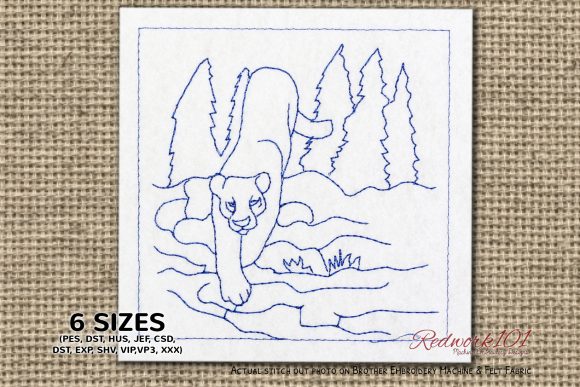
From the title alone, Puma at Riverside Redwork sets a clear, evocative scene. As a professional embroidery designer, my first thought is that this design isn’t just decorative; it’s narrative. It feels rustic, classic, and handmade. The “Redwork” style implies a focus on outline and detail, which often translates to a more artisanal and premium feel. For a small business, this is a powerful starting point. Whether you’re a boutique café near a river, a pet brand with a wild spirit, or a creative studio wanting a natural mascot, this design can communicate a sense of place and personality.
The design’s category, Wild Animals, paired with Embroidery, suggests it’s built to be a bold focal point. The puma is not just an animal; it’s a symbol of strength and independence, which can align beautifully with a business’s brand story. The optional “Stitch Box” mentioned in the description is a practical note for us designers—it means the design area is clearly defined, which is crucial for production planning.
Performance in Real Business Applications
Let’s move from impression to application. How does Puma at Riverside Redwork actually perform when you put it on your merchandise? The answer depends on thoughtful execution.
Embroidered Patches for Versatile Merch
For businesses like handmade shops or Etsy sellers, a custom embroidered patch is a versatile asset. Puma at Riverside Redwork has the potential to be an excellent patch design due to its likely defined outlines. It could be stitched onto a backing and applied to tote bags, aprons, or even as a product label accent for a handmade product. This transforms a simple item into branded merchandise. For a local brewery or outdoor guide service, a patch featuring this design on a cap or work shirt becomes a badge of identity for staff and a collectible item for customers.
Direct Garment Embroidery for Uniforms & Apparel
Directly embroidering this onto custom apparel is another key use. As a chest logo on staff polo shirts for a boutique or bakery, it provides a professional yet artistic touch. On the sleeve of a work shirt for a florist or studio, it acts as a subtle, quality detail. For a tote bag, it becomes the standout mark, elevating a simple bag into premium small business merch. The “Redwork” style, typically using a single color or limited palette, can offer excellent stitch economy and clear visibility.
Where to Use This Design Carefully
Every machine embroidery design has its considerations, and a detailed outline design like this one requires planning.
Size is critical. Before running any production, you must test the embroidery file at the intended final size. If you plan to use it as a small patch (under 2 inches) or on a cap front, the intricate details of the puma and the riverside elements must remain clear and not become a muddy blob of stitches. High stitch density in a small area can compromise durability and appearance.
Surface and Fabric Matter. Embroidering on curved surfaces like caps requires adjustments. On textured fabrics like a woven apron, the design’s outlines need to hold up. On dark uniforms, you’ll need to consider thread color contrast—a classic redwork on a black shirt can be striking, but you must ensure the design isn’t lost.
Lastly, consider durability for items like work shirts or aprons that need frequent washing. A clean, well-spaced outline design often fares better than overly dense fills, but you must use the proper stabilizer and quality thread to maintain the design’s integrity over time.
Impact on Brand Identity and Customer Perception
Choosing Puma at Riverside Redwork for your business isn’t just about putting a picture on a shirt. It’s a brand decision.
This design inherently leans towards visual consistency across different products. The same file can be used for a staff apron, a customer tote bag, and an event merch pin, creating a cohesive brand family. It adds perceived value; a tote bag with a custom embroidered logo feels more premium than one with a printed design. It builds customer trust and recognition through a distinctive, memorable symbol.
For a craft business or handmade brand, using an embroidery design with an artisanal feel like this one reinforces your handmade presentation. It tells your customers that care and craft extend to every detail, including your own branding. This directly influences buyer engagement, making your merchandise more desirable and shareable.
Practical Designer Notes Before You Stitch
As someone who runs commercial embroidery projects daily, here is my checklist for implementing Puma at Riverside Redwork successfully.
- Test in Black and White First: Run a simple test stitch, even in one color, to evaluate the clarity of the outlines and the overall composition at your target size.
- Check Small Patch Size Performance: If patches are your goal, stitch a sample at the smallest size you intend to use. Verify the puma’s features and any text elements (if present) are legible.
- Review Thread Color Contrast: Based on your final fabric colors, select thread colors that will pop or harmonize appropriately. Don’t assume the preview colors are final.
- Inspect Spacing and Density: Look for any areas where stitches might be too close, which could cause puckering or stiffness on lighter fabrics.
- Confirm Hoop Size and Stabilizer: Match the design’s required hoop size to your garment or product. Always use the correct stabilizer for the fabric—this is non-negotiable for quality.
- Test on Real Fabric: Never rely solely on the digital preview. Stitch it on a scrap of the actual fabric you’ll use for production.
- Create a Mockup for Client Approval: For your own business or a client, use a printable mockup to show how the design will look on the final product. This prevents misunderstandings.
- Compare Beside Other Design Assets: Place the stitched sample beside your other branding elements (like typography) to ensure visual harmony.
- Confirm Commercial Licensing: Before any business use, verify the licensing terms of the digital embroidery file. Ensure you have the rights for commercial production on the merchandise you intend to sell.
Remember, details like exact stitch count, specific file formats, or precise hoop size are not included in this review. You must check those details with the file provider before moving to production. Puma at Riverside Redwork presents a fantastic opportunity for businesses seeking a classic, nature-inspired emblem. By treating it as a core design asset and applying these professional practices, you can transform it into a powerful, durable, and beautiful element of your brand’s finished product.